Results for "boiler evaporator"
A boiler evaporator is a device used in heating systems to convert water into steam by applying heat, commonly found in industrial and commercial applications.


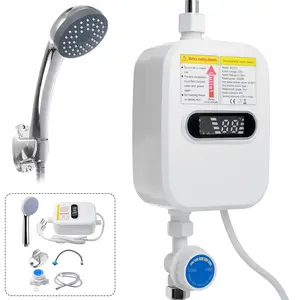
5.0
36 sold
-14%$68.76$80.22


VEVOR Store

4.3
575 sold
$103.13


Related Searches
Related Categories
Introduction
The boiler evaporator plays a crucial role in various heating systems, especially in industrial settings. It functions by heating water until it transforms into steam, which can then be utilized for energy generation, heating, or other processes. Understanding how a boiler evaporator works can help you appreciate its importance in maintaining efficient heating operations.
Here are some key aspects of boiler evaporators:
Here are some key aspects of boiler evaporators:
- Efficiency: Boiler evaporators are designed to maximize heat transfer, ensuring that the water is heated effectively.
- Types: There are different types of boiler evaporators, including natural circulation and forced circulation models, each suited for specific applications.
- Maintenance: Regular maintenance is essential to keep boiler evaporators running smoothly and to prevent issues such as scaling and corrosion.
- Applications: These devices are widely used in power plants, chemical processing, and food production industries.