Results for "micropump"
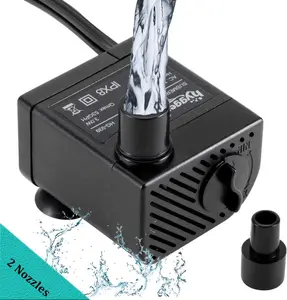
A micropump is a small pump designed to move liquids or gases in precise quantities and is commonly used in various applications, including medical devices, laboratory equipment, and industrial processes.



-40%$12.02$20.04

5.0
8 sold
-31%$66.04$95.53





-24%$19.00$25.00


-50%$11.58$23.10


Related Searches
Related Categories
Introduction
Micropumps are essential devices in many industries, providing precise control over the movement of liquids and gases. Whether you're in the medical field, working with laboratory equipment, or involved in industrial processes, understanding the functionality of a micropump can significantly enhance your operations. These compact pumps are designed to deliver small volumes of fluids with great accuracy, making them ideal for applications where precision is critical.
Micropumps come in various types, including peristaltic, diaphragm, and piezoelectric, each offering unique advantages depending on the application. Here are some key points to consider when exploring micropumps:
Micropumps come in various types, including peristaltic, diaphragm, and piezoelectric, each offering unique advantages depending on the application. Here are some key points to consider when exploring micropumps:
- Size and Portability: Their compact design allows for easy integration into portable devices.
- Flow Rate: Micropumps can be tailored to deliver specific flow rates, ensuring optimal performance.
- Material Compatibility: Many micropumps are made from materials that resist corrosion and wear, extending their lifespan.
- Energy Efficiency: Modern micropumps are designed to consume minimal power, making them environmentally friendly.
- Application Versatility: From drug delivery systems to inkjet printers, micropumps are used in a wide range of applications.