Search
Coupon Center
Get app
Log in
TikTok Shop
Shop All Categories
glass filament
glass filament
Featured brands
Authenticated products
Verified shops
Creality official
4.7
205.0K
Sold
2.1M
Follower
$
16
.49
$
18
.99
$
553
.14
(-21%)
$
179
.99
(-10%)
$
999
.00
$
26
.99
Free shipping
QIDI ABS-GF25 Glass Fiber ABS Filament 1.75mm for FDM 3D Printing, 3D Printing Supplies, High Hardness, Excellent Bonding, Frosted Surface, Compatible with Most FDM Printers, 1kg (2.2lbs) Spool
8 sold
$
35
.99
Black & Gold Dual-Color Silk PLA 3D Printing Filament, FDM printing material, 1.2 kg spool, striking dual-color effect, individually wrapped, moisture-resistant, silky smooth filament feed, high strength and durability, suitable for home printing and stud
4 sold
-36%
$
14
.97
$23.39
Free shipping
Creality official
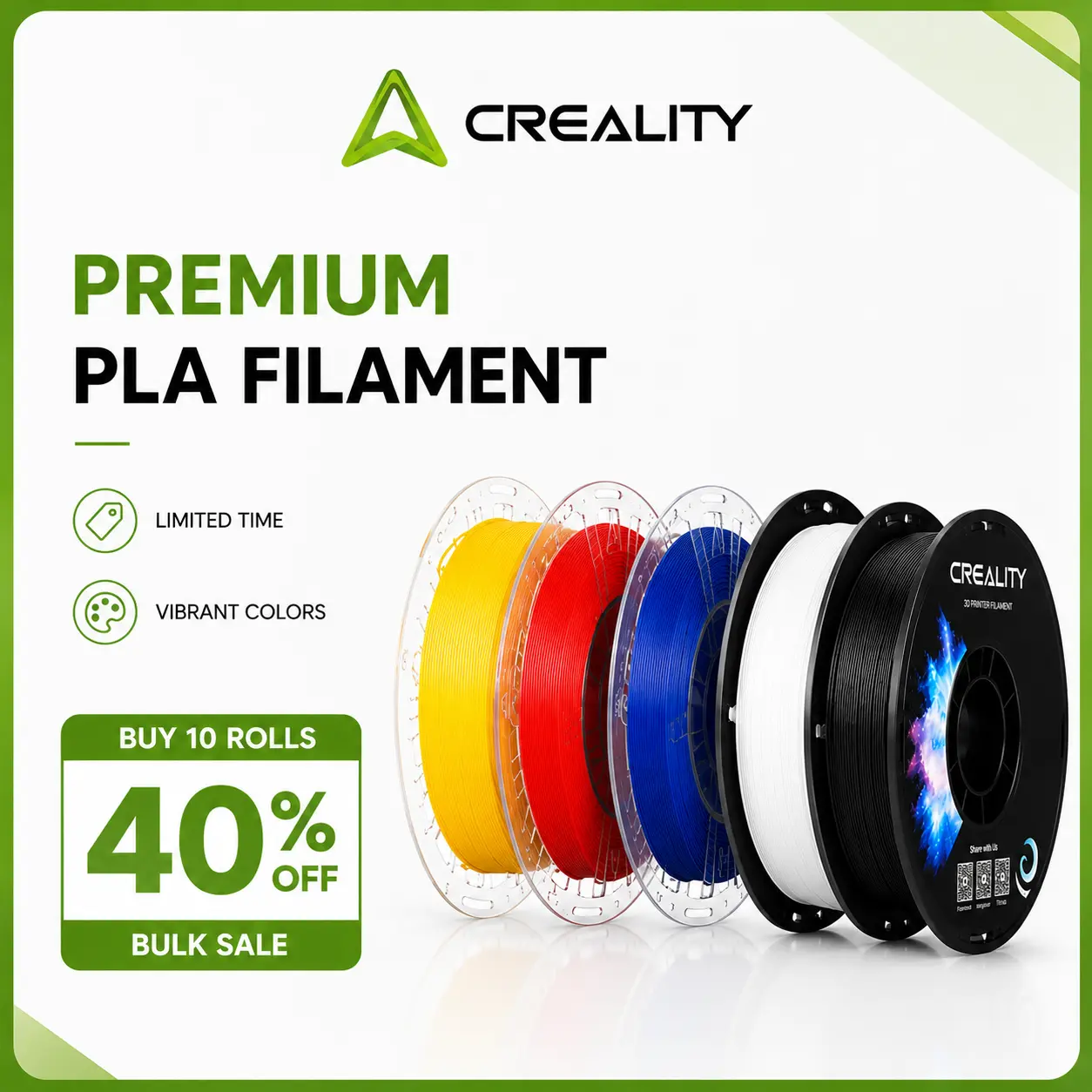
Creality Hyper PLA RFID 3D Printing Filament - 1kg, 10x Faster, 30-600mm/s Speed Up Your Creativity, High-Speed 3D Printing Supply for Computers & Office Equipment
4.9
2.4K sold
$
26
.99
Free shipping
PLA+ 2.0 3D Printer Filament 1.75mm 200g - Premium Quality, Smooth Printing, Strong Layer Adhesion, Great for Models
5.0
53 sold
Flash sale
00:00:00
-52%
$
9
.60
$19.99
Free shipping
Tricolor Silk PLA+ 3D Printer Filament Bundle, Shiny Silk PLA+ Filament 1.75mm Pack, Shiny Multi Color Change, Smooth Multicolor PLA+ Filament for Christmas Decorations - 4 Spools 250g Each
5.0
3 sold
Limited time deal
$
10
.99
Free shipping
Creality official
Creality Ender-PLA Filament 2KG Value Pack
4.9
253 sold
$
29
.99
Free shipping
ERYONE | silk twist color |Multi Color Filament | | HS Gradient RainbowSilk |Brennung aus Titan PLA|5-8m Color Change 3D Printer Filament 1.75mm +/- 0.03mm, 1kg (2.2lbs)/spool Matte Rainbow PLA
4.9
3.1K sold
$
18
.99
FILAZOO Macaron Color PLA 3D Printer Filament 1.75mm 1KG Spool | Soft Pastel Colors Candy Palette | High Speed Tangle-Free Smooth Printing | Compatible with Bambu Lab X1/P1S/A1, Creality Ender 3, FDM 3D Printers Premium Bundle
58 sold
-18%
$
17
.21
$20.99
Free shipping
FUNTOO 7 Color Sparkle Transparent PETG Filament, 7 Different Crystal Colors (0.66lbs) 1.75mm for Gloss Finished 3D Print Vase & Craft Models smooth printing green purple blue high speed printing multi-color high-quality material printer bundle fdm
3 sold
$
7
.90
1 Roll Pla 3D Filament Metallic Flash Gold 1.75mm 250g, Craft Art Creation Supply, High-Quality 3D Printing Material
$
12
.04
Free shipping
Rainbow Dream Gradient Polylactic Acid (PLA) 3D Printing Filament - 1.75mm, 0.66 lbs Seamless Slow Shift Spool, Low-Warp Biodegradable Resin, Anti-Tangle Smooth Feeding for Beginners' Desktop FDM Printers, 3D Printing Supplies for DIY Projects, All Mainst
4.2
18 sold
$
9
.98
Free shipping
Epelay 3D Printer Filament, Galaxy Glitter PLA Filament 1.75mm ±0.02mm, Glow in the Dark with UV, 4 x 250g Spoolsfor FDM Printers (Glow Glitter Blue, Glow Glitter Green, Galaxy Glitter Silver, Gold) tiktokshopbacktoschool
5.0
56 sold
Flash sale
00:00:00
-32%
$
27
.15
$39.99
0.66lbs Transparent Pink with Silver Glitter PETG 3D Printer Filament 1.75mm, 0.02mm Fine Layer Lines, Sparkle Effect, High Toughness, Stable Feeding, Fits Most Printers, Ideal for Decorative Prints, Lighting Fixtures, Romantic Theme
5.0
17 sold
$
9
.98
Free shipping
SUNLU
SUNLU PA-CF/GF Nylon Ultra-Strong 3D Printing Filament - Carbon/Glass Fiber Reinforced, Glass Filament for Aerospace Frames, Precision Engineering, Pa6-Gf | Grey 1Kg, Pre-Print Drying tiktokshopbacktoschool
4.8
62 sold
$
38
.99
Free shipping
PLA+ 3D Printer Filament, Glow in The Dark Filament 1.75mm, Long-Lasting Glow & High-Brightness, Luminous Pink Bright 3D Printing Filament for Most FDM 3D Printer - 1kg Spool(Glow Pink)
2 sold
Limited time deal
$
9
.99
Epelay PETG 3D Printer Filament, 1.75mm, 1kg Black, Tough, Heat Resistant, Low Stringing, Mirror Gloss Smooth Prints, No Clogs, Compatible with FDM 3D Printers tiktokshopbacktoschool,back to school,back to school haul
5.0
653 sold
Limited time deal
-57%
$
9
.99
$22.99
Rainbow Galaxy Silk PETG - Print Dreams That Shine! Professional-grade filament with zero tangles, perfect for viral TikTok content. Vibrant colors, smooth layers. Compatible with all printers. Create magic, go viral!"#Filament#PETG#creality3d#3dprinting
5.0
36 sold
$
26
.99
Free shipping
Translucent Silver Glitter PETG Filament 1.75mm, 300g per spool, Tangle-Free Vacuum Pack, Easy Printing for Lampshades, Holiday Decorations, Display Ornaments, Fits All Desktop FDM 3D Printers, Single Reel & All in 7color Bundle Set, Fairy Figurines, Neat
7 sold
$
55
.18
Free shipping
FUNTOO Translucent Silver Glitter Infused PETG Filament 1.75mm, Stable Uniform Roundness, Great Light Transmittance For Lampshade Ornament Decor, Anti-Shrink Smooth Printing Supply, Tangle-Free Vacuum Sealed Coil Fit All Desktop FDM 3D Printers 0.66lbs, G
3.0
53 sold
$
9
.98
Texas Colorful Filaments Matcha Mist Shining Rainbow PLA 3D Printing Filament - 1.75mm, 1kg, Translucent Gradient
3 sold
$
16
.99
Free shipping
QIDI PETG Translucent 3D Filament - 1.75mm, 1kg (2.2lbs) Spool with RFID Chip, Water-UV Resist, Light Diffuse, Soft Glow Effect, Dimensional Stability, Easy Printing, High-Speed Capability, Ideal for Lampshades & Decorative Elements, Frostedglass Look, 3D
5.0
91 sold
$
17
.99
SUNLU 1KG 3D Filament | Transparent PLA | No Stringing, No Clogging | Exquisite Crystalline Texture, Boundless Creativity | Color Aesthetics, Pro-Essential, Beginner's Top Choice
4.9
97 sold
$
16
.59
Snorlax Crystal Green PLA Filament Transparent for Detailed 3D Models & Figures High-Quality Material for Smooth Precise Prints
3.0
2 sold
$
5
.99
Free shipping
Amolen Crystal-Transparent PLA 3D Printing Filament - 1.75mm, 1kg/2.2lb Spool, Biodegradable, Recyclable Materials, No Bubble, No Jamming, Outstanding Strength, Toughness 3D Printing Supply
1 sold
$
25
.99
Free shipping
Creality official
Creality 1.75mm 3D Printer Filament 1KG, Spoolless Corn-Based Options with Desiccant - PLA, PETG, Silk, TPU, ABS, PC, Carbon, Metallic, Glow in the Dark, Starry Colors for FDM Printers, 3D Pens & DIY Kits, 100% Biodegradable, Eco-Friendly
4.8
100.3K sold
$
16
.49
Related Searches
glass fabric
led filament
glass glasses
filament maker
filter glass
glass insulators
magnetic filament
glass goblets
glass water filtration
Related Categories
3D Printing Supplies
Office Equipment Parts