Results for "cube 2 hypercube"
A cube 2 hypercube refers to a geometric shape that extends the concept of a cube into higher dimensions. It is a four-dimensional analogue of a cube, also known as a tesseract.


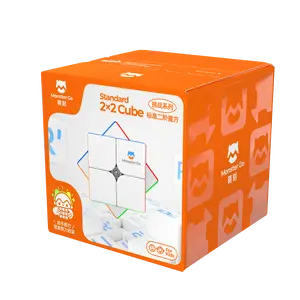


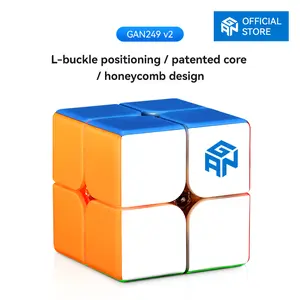
5.0
12 sold
-50%$16.99$33.98


3.0
12 sold
-10%$13.49$14.99


$7.99


Related Searches
Related Categories
Introduction
Magic cubes, particularly the cube 2 hypercube, are fascinating objects that capture the imagination of mathematicians and puzzle enthusiasts alike. A magic cube, or a hypercube, is not just a three-dimensional object; it transcends into the fourth dimension, offering a unique perspective on geometry. These cubes are not only intriguing due to their complex structure but also because they challenge our understanding of space and dimension.
When exploring magic cubes, it's essential to understand their properties and how they relate to traditional cubes. Here are some key features and insights:
When exploring magic cubes, it's essential to understand their properties and how they relate to traditional cubes. Here are some key features and insights:
- **Dimensionality**: A cube 2 hypercube has 16 vertices, 32 edges, 24 square faces, and 8 cubic cells.
- **Visualization**: While we cannot visualize the fourth dimension directly, we can represent it through projections or shadows in three-dimensional space.
- **Applications**: Magic cubes have applications in computer graphics, art, and even theoretical physics, showcasing their relevance beyond pure mathematics.
- **Puzzle Aspect**: Many puzzle enthusiasts enjoy creating and solving 3D puzzles that mimic the properties of hypercubes, adding a layer of fun and challenge to the concept.