Results for "co2 welding gas"
CO2 welding gas is a type of shielding gas commonly used in welding processes, particularly in MIG (Metal Inert Gas) welding. It helps protect the weld from contamination and provides a stable arc for better weld quality.


YesWelder Store

4.7
383 sold
$25.99


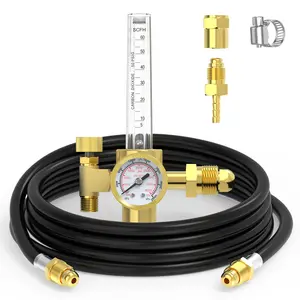
YesWelder Store
4.7
1.1K sold
-12%$35.99$40.99


PowerSmartUSA

4.4
229 sold
-41%$199.99$339.99


YesWelder Store
5.0
14 sold
-26%$211.63$286.98



SEESE Store
4.6
24.3K sold
-49%$51.31$99.90





Related Searches
Related Categories
Introduction
CO2 welding gas is an essential component in the welding industry, particularly for those involved in MIG welding. This gas is favored for its affordability and effectiveness in shielding the weld area from atmospheric contamination. When using CO2 welding gas, welders can achieve a cleaner, stronger weld, making it a popular choice for both professional and DIY projects.
Understanding the properties and applications of CO2 welding gas can significantly enhance your welding experience. Here are some key points to consider:
Understanding the properties and applications of CO2 welding gas can significantly enhance your welding experience. Here are some key points to consider:
- Cost-Effective: CO2 is generally more affordable compared to other shielding gases, making it a budget-friendly option for welders.
- Versatile Usage: It can be used on a variety of materials, including steel and stainless steel, providing flexibility in different welding applications.
- Improved Penetration: CO2 welding gas allows for deeper penetration in the weld, resulting in stronger joints.
- Less Spatter: Although it may produce slightly more spatter than argon, many welders appreciate the balance of performance and cost.